

Lyricist Keiko Ueno
Misunderstandings and experiences that seem like detours are the first steps towards growth.
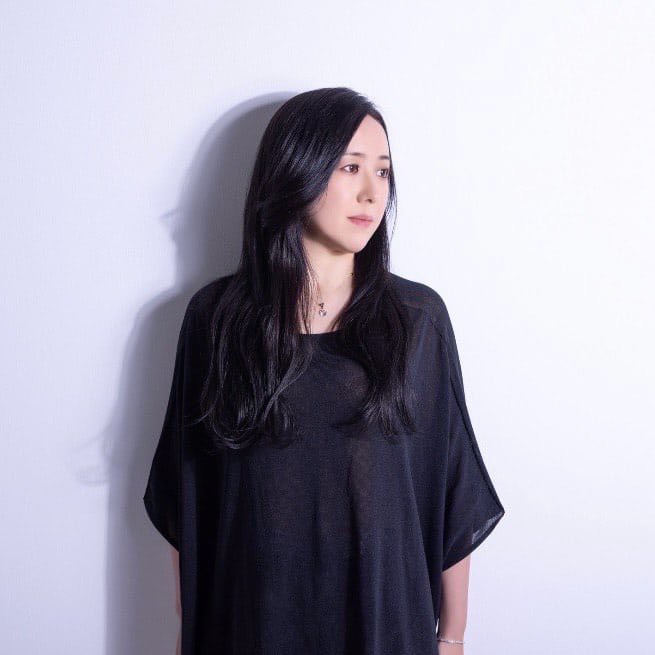
Lyricist Keiko Ueno
■ Profile
She graduated from the vocal music department of Musashino Academia Musicae. After performing in musicals, she made her debut as a lyricist in 1999 with "Kaze no Uta," the theme song for the anime "HUNTER×HUNTER." She has written lyrics for stage productions such as "ROCK MUSICAL BLEACH," "NARUTO," and "OSK Nippon Opera Company," as well as for Sanrio Puroland's main parade, "The Quest of Wonders Parade." She is also involved in vocal coaching and is dedicated to training young actors.
Keiko Ueno, who has written lyrics for numerous anime and 2.5-dimensional stage productions, including the theme song "Kaze no Uta" for "HUNTER×HUNTER," shared her experiences as a student striving to become an opera singer, her journey from stage activities to becoming a lyricist, and her approach to working on her projects.
■ Finding my place in the world during my student years
From the second grade of elementary school, I attended the Musashino Academia Musicae's affiliated music school, where I studied all aspects of music, sang operas in Japanese, and even appeared in operas as a child actor, so I believed I could become an opera singer. On the other hand, from the third grade of elementary school to the third year of junior high school, I was bullied at school and felt like I didn't belong. There were times when I would come home all day without talking to anyone. Even so, I felt like I belonged at the music school, and I realized that how I was perceived by others differed depending on the place. From that experience, I was able to believe that even if every place was difficult, there was a place for me somewhere. Also, because I was not good at expressing my feelings verbally, I conveyed my thoughts through letters and exchange diaries. Even classmates who wouldn't talk to me at school would respond in our exchange diaries. Even if we couldn't connect directly, we could connect through writing. I think the experience of thinking about "how to write so that the other person understands" and "what words won't be misunderstood" led to my later songwriting.
■The path to becoming a lyricist
During my university years, I received instruction from a professional opera singer. She frequently appeared on television, and I often accompanied her to concert venues as her assistant, driving her around and taking care of her personal needs. This gave me invaluable opportunities to witness firsthand the hard work behind the glamorous stage and her life backstage. Supporting her so she could perform at her best suited my personality, so perhaps my career behind the scenes had already begun at that time.
After graduating from university, I went to Italy to study opera singing, but I was told, "You don't have an instrument." This meant that in opera, the body itself is the instrument, so even if I had the technique, my body wasn't suited to it. So, I gave up on my dream of becoming an opera singer and reluctantly returned to Japan. People around me encouraged me to audition for musicals, and I was able to appear in productions such as "My Fair Lady" starring Mao Daichi and "La Cage aux Folles" starring Masachika Ichimura. However, as I performed on stage, I began to see the limits of my abilities and what I would be like at 40. I felt that "this is not a path I can continue for the rest of my life," and I quit being a musical actress after three years. I was essentially unemployed, and it was then that I remembered for the first time, "Come to think of it, I might be good at writing," and I began to explore the path of becoming a lyricist, and I was given the opportunity to participate in the theme song competition for "HUNTER×HUNTER." I wrote about the feelings of Mito, the adoptive mother who sends the protagonist Gon off from Whale Island. For me, someone who grew up watching the World Masterpiece Theater series, anime theme songs were something that resonated with the emotions I felt after finishing a show. That perspective caught the director's eye, led to my song being used as the ending theme, and ultimately to my debut as a lyricist.
■ Turning the characters' feelings into lyrics
When writing lyrics, what I value most is making it feel as if the character is truly singing. I cherish loving the work and deeply understanding the author's intentions, the story, and the characters' emotions. Even emotions not directly written in the original work can sometimes be seen by tracing their words, actions, and the story. Instead of arbitrarily adding things, I dig deep into the lyrics to the point where I believe, "This character would surely feel this way." When I can't think of the words, I take a break from the work for two or three days, or reread the manga. I have no concerns about AI. I think it would be difficult for AI to completely express the emotions, values, and nuances of a person's heart that a person has experienced. That's why I want to continue to cherish the time and encounters that move me, and continue to dedicate myself to writing lyrics. I also value respect for composers. A good melody already has words. It is essential for the lyricist to feel those words and weave them together.
■ Future outlook
I used to be a music teacher at an elementary school in Asaka City. Even if you've never taken piano lessons, everyone encounters sheet music and lyrics in the elementary school music room. That might be your lifelong encounter with music. I'd love to write a song that will be included in a music textbook someday. It would be wonderful to write a school song.
■Message to students
I want students to make a "big mistake." I went to a music university believing I could become an opera singer, and even studied in Italy, but I didn't become an opera singer. After that, I performed in musicals, but quit after three years. At the time, those experiences seemed like setbacks and detours, but now they're all connected to my work. Because I studied vocal music, I understand the breathing of singers, and because I danced on stage, I understand how to sing while dancing. Because I've written letters and diaries, I know how to convey my feelings. I didn't have a TV at home until I graduated from high school, and being left behind by trends has become my strength, allowing me to write words that don't just fade away with trends. You never know what experience will be useful in life. Failures, being different from others, things you thought were flaws can, much later, transform into unique strengths. So, I think it's okay not to try too hard to choose the right answer from the start. There are steps you can't take without a little bit of the misconception that "I might be able to do it." Cherish your own feelings and be moved by what's in front of you. Even if things don't always go the way you want, chance encounters and opportunities that come your way can lead your life in unexpected directions. Those paths will eventually converge, leading you to a place where you can see a magnificent view.
Student Newspaper Online, September 9, 2026, Interview with Rui Yamamoto, 2nd year student at Bunkyo University
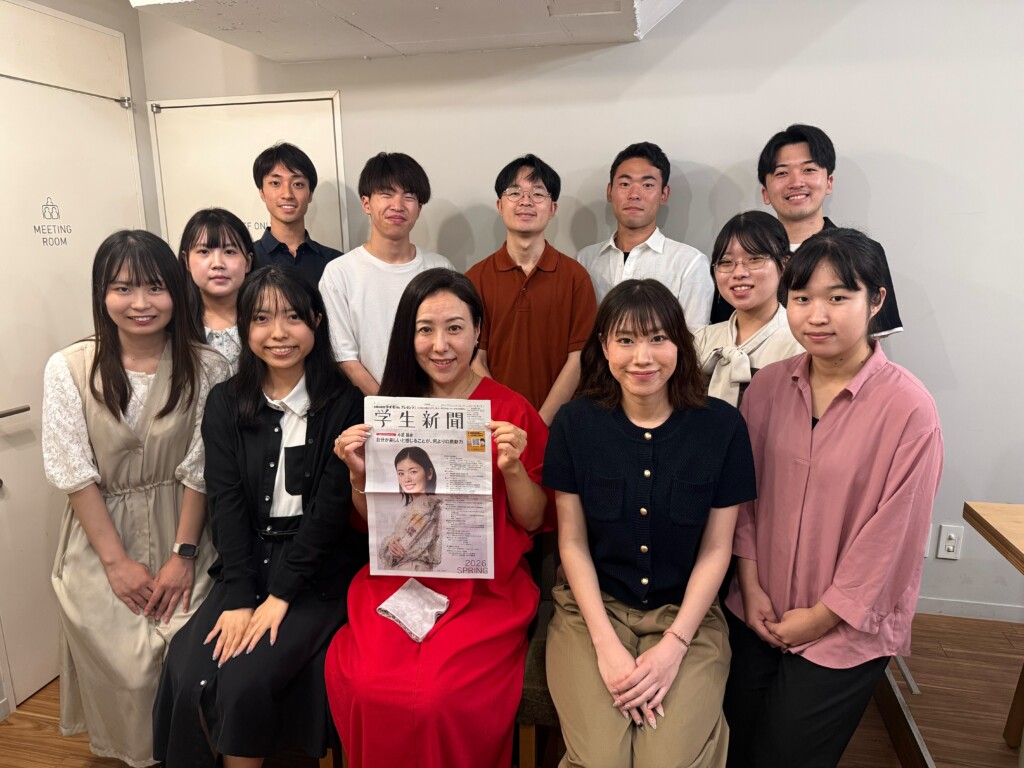
Kyohei Nakazawa (3rd year, Waseda University) / Mitsuki Saito (4th year, Senshu University) / Yuta Wakita (3rd year, Hosei University) / Hideya Tanaka (1st year, Nihon University) / Tatsushi Harada (2nd year, Nihon University) / Rui Yamamoto (2nd year, Bunkyo University) / Chiharu Yamada (2nd year, Information Management Innovation Professional University) / Akina Yoshimatsu (4th year, Musashino University) / Yurie Watanabe (3rd year, Josai International University) / Ayuri Nakatsu (2nd year, Dokkyo University) / Haruna Shoji (4th year, Tokyo University of Pharmacy and Life Sciences)



No comments yet.