

Taro Honda, Member of the House of Representatives
A truly rich society is one where we can live our daily lives without having to think about politics.
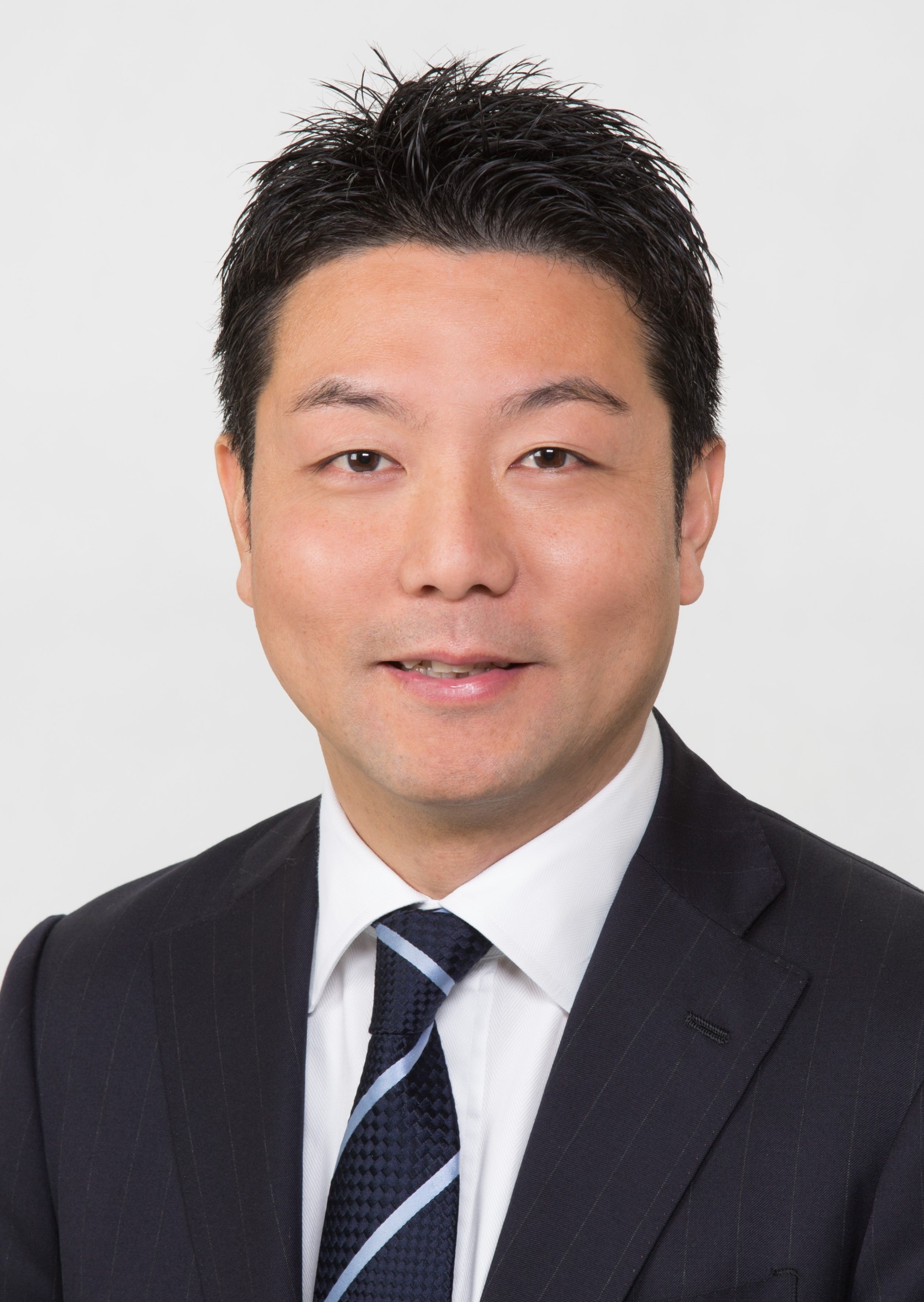
Taro Honda, Member of the House of Representatives
■ Profile
Graduated from the Faculty of Law, University of Tokyo in March 1998.
March 2000: Completed graduate studies at the University of Tokyo Graduate School of Law and Politics.
Joined the current Citigroup Securities in April 2000.
Joined Monex Securities in October 2001.
March 2007: Completed graduate studies at Waseda University Graduate School of Law.
Registered as a lawyer in December 2008 (Atsumi & Sakai Law Offices)
First elected to the Kyoto Prefectural Assembly in April 4.
First elected in the 48th House of Representatives general election in October 2017.
October 2021: Parliamentary Vice-Minister for Foreign Affairs (First and Second Kishida Cabinets)
November 2020 Deputy Minister of Defense and Deputy Minister of the Cabinet Office (Second Ishiba Cabinet)
Appointed Chairman of the National Defense Committee in October 2025.
It might actually be a blessing to not feel politics are a part of your daily life. This was the paradox expressed by Taro Honda, a member of parliament in charge of defense policy for the Liberal Democratic Party. We listened to him talk about his transition from lawyer to politician, his thoughts on defense and diplomacy, the challenges facing local areas, and his message to students.
During my student days, I led a very typical university life. I belonged to a tennis club called WEEKEND, and I often traveled abroad with a backpack during summer vacations. My trip to New Zealand is particularly memorable. I spent about two weeks traveling around the North and South Islands using a bus pass that allowed unlimited travel. Despite not being able to speak English, I stayed in shared rooms in B&Bs and hostels, meeting and parting ways with Western backpackers I met on the bus. These experiences are useful in my current job. Having been exposed to the values of people from various countries, I was able to approach any topic without hesitation when I was in charge of diplomacy.
■The origin of my aspiration to become a politician
I became interested in politics in 2009. At the time, I had worked for a securities company and was a lawyer, but law is a job that follows a fixed framework; you can't create your own laws. I was faced with the contradiction of having to follow laws that I thought were wrong. I wanted to be on the side that creates the laws I believed to be right, when the Great East Japan Earthquake occurred. Seeing the Democratic Party government's response amidst the deaths of so many Japanese people, I felt strong indignation, and I decided to enter the world of politics, wanting to do work that could save people in times of disaster and crisis.
My experience working in the financial industry is still valuable today. For example, my practical understanding of how changes in consumption tax affect exchange rates, interest rates, and public finances forms the basis for advancing fiscal and economic policies. There aren't that many politicians with a strong understanding of finance, and I feel that's one of my strengths.
■ The reality that "misunderstandings" can lead to attacks
My most recent major task was the review of the "Three Strategic Documents," which consist of the National Security Strategy, the National Defense Strategy, and the Defense Forces Development Plan. As the person in charge of defense, I gathered opinions within the party and submitted them to the Prime Minister as recommendations. I also worked on lifting the ban on exports of defense equipment (weapons).
One of the constant concerns in defense matters is the information gap between the government and the public. In defense and diplomacy, due to the nature of relations with other countries, it's impossible to reveal all aspects of strategy and negotiations. Nevertheless, I strive to convey the fundamental thinking to the extent that it can be disclosed. We are strengthening our defense capabilities not because we want to go to war, but because of the harsh reality that "if we are misunderstood as weak, we will be attacked." I believe that preventing the misconception that we can invade will ultimately lead to maintaining peace.
Therefore, I am constantly aware of the difficulties in disseminating this information. While I have opportunities to talk about these topics in lectures and other settings, the reality is that it is difficult to convey the entire message through the media due to time constraints. That is why I consider opportunities like this interview to be an important platform for sharing my thoughts.
Another area we are focusing on is support for retired Self-Defense Force personnel and their families. We are currently working on designing a system to establish a new agency under the Ministry of Defense to provide economic and emotional support to injured Self-Defense Force personnel, and to create a community for families who are not informed of their loved ones' destinations or return dates during their missions. We are working with the Ministry of Defense on this for next year's budget.
■ Local Issues and the Nature of Politics
Not just in my constituency in northern Kyoto, but throughout Japan, the biggest challenge facing rural areas is population decline and aging. A decrease in population leads to a vicious cycle where businesses can no longer survive, and the disappearance of shops makes these areas even more difficult to live in. I believe it is the job of politics to correct the over-concentration of power in Tokyo to some extent, and to improve infrastructure such as roads, railways, and hospitals, creating a foundation where people who want to return to their hometowns can do so with peace of mind.
I find my work rewarding when policies I believe are right are implemented and when the lives of local people actually improve. The fact that we were able to transfer defense equipment has led to the creation of a system where we can share equipment with our allies and like-minded countries, which has given me a great sense of satisfaction. Also, when infrastructure development that directly affects the lives of local people, such as flood control measures for the local Yura River, comes to fruition, there are people who shed tears of joy, and that is the most rewarding thing of all.
On the other hand, there are disagreements even within the ruling party, and frustration when policies that are considered good are not implemented. However, in recent years, many opposition parties have tended not to oppose defense policy. I think this is because many people have come to realize, after seeing the global situation, that life depends on having one's own life.
What I value most in politics is taking the time to discuss things based on the premise that everyone makes mistakes. I believe that listening to minority opinions, rather than simply pushing through decisions by majority vote, leads to better policies and better understanding in the long run.
■Message to students
Politics directly impacts the lives of people of all generations. Issues like consumption tax, disaster preparedness, defense, and diplomacy all affect the very foundations of our lives. However, the fact that we don't have to feel politics close to us is also a sign of peace. If the time comes when we are forced to get involved, I hope we will face it head-on for the sake of our own lives, the lives of our families, and the lives of our friends and family.
Personally, I want to tell you to work hard at what you want to do. It's okay if your interests change along the way. For many people, it's not easy to find something they want to do for the rest of their lives, but if you do find something you truly love, that's a wonderful thing. I myself found my work as a lawyer fulfilling, but I was troubled by the contradictions of working within the framework of the law. The Great East Japan Earthquake prompted me to jump into the world of politics, and now I feel that I have found my true passion. If there is something you want to do, I hope you will challenge yourself without hesitation.
Interview conducted by Kenta Ito, 3rd year student at Waseda University, for Student Newspaper Online on August 19, 2026.
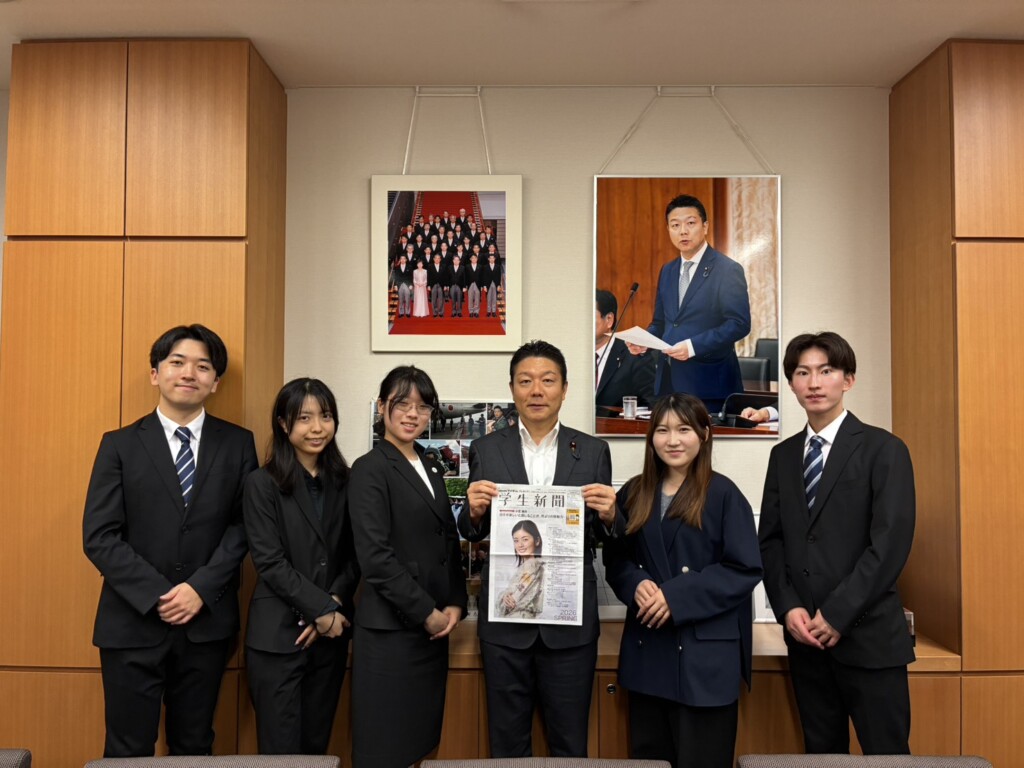
Tatsushi Harada (2nd year, Nihon University) / Yurie Watanabe (3rd year, Josai International University) / Chiharu Yamada (2nd year, Information Management Innovation Professional University) / Reina Inomoto (1st year, Kyoto University of the Arts) / Kenta Ito (3rd year, Waseda University)
List of related articles

Masayuki Saito, Chairman of the National Federation of Care Providers

Imada Mio: My motivation is to keep having fun
Hiroshi Komiyama, Chairman, Mitsubishi Research Institute, Inc.

Kenji Kawada, Representative Director, AlbaLink Co., Ltd.

Kaho Takada: Keep running in the present so that you can make the past a good one

Michinori Mizuno, Chairman of the Board, Sony Music Foundation

Genie Inc. Human Resources Department Recruitment Group Manager...

No comments yet.