

Kentaro Nanao, Public Works Manager, Anthropic Japan LLC
The strength to say "I don't know" to both AI and humans.
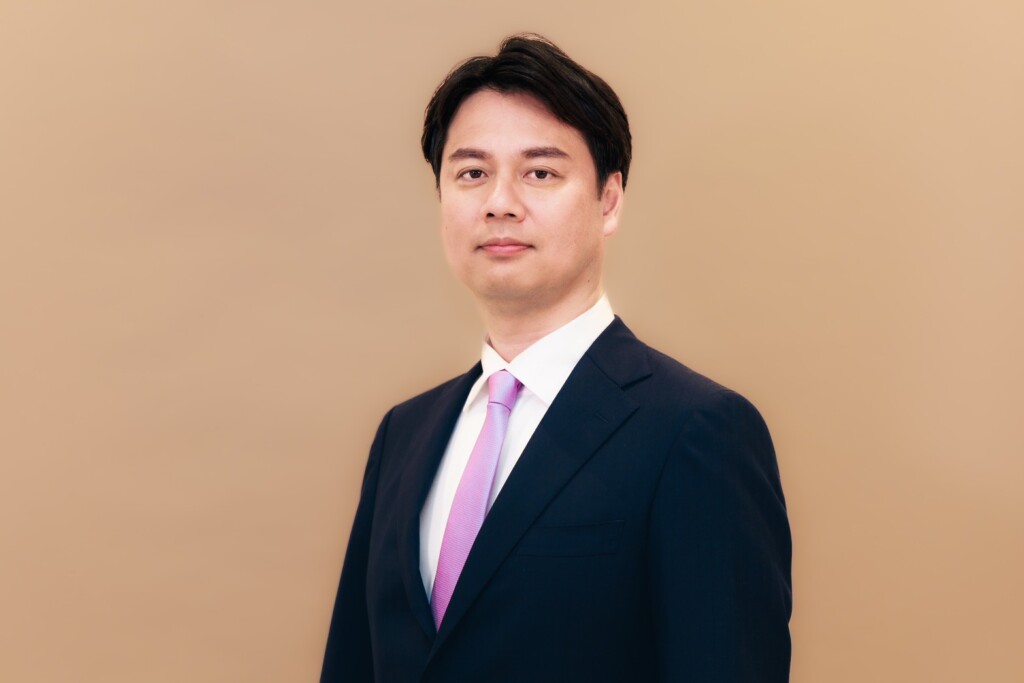
Kentaro Nanao, Public Works Manager, Anthropic Japan LLC
■ Profile
Head of Public Sector Projects at Anthropic Japan LLC. With approximately 20 years of experience in the IT and digital industry, he has provided support to various clients both domestically and internationally. Currently, he is responsible for central government ministries, local governments, universities, and research institutions, promoting the use of the generative AI "Claude" and providing technical support. He is interested in the safety and social implementation of AI and is working to expand its use in the public sector.
Kentaro Nanao, who has built a career of approximately 20 years in the IT and digital industry, joined Anthropic Japan, which develops generative AI such as "Claude," because he wanted to be involved in the early stages of the deployment of ethical, cutting-edge AI in Japan. As the person in charge of public works, Mr. Nanao directly interacts with public and educational institutions such as central government ministries, local governments, and universities. We interviewed him about what made him decide to join the company, the nature of the business, and his approach to AI.
I have built a career in the IT and digital fields for about 20 years. During that time, I have interacted with various clients and had the opportunity to be stationed overseas, but I often felt that it was difficult to directly apply the advantages of IT and digital to Japan. However, what I felt when I used generative AI, especially Claude, was that it could accept seemingly analog methods as well. For example, with digitalization, some people find web input more burdensome than paper, so it was not realistic for everyone to switch to digital all at once. Generative AI can read what has been written on paper as is. It is a system that is user-friendly for both those who are proficient in digital from the start and those who want to transition gradually. This is what attracted me to generative AI. In that context, I had the opportunity to work with Anthropic, and that connection led me to apply for a position at the company.
■ The appeal of ethical AI
The main reason I decided to join this company was my desire to be involved in the early stages of the deployment of ethical, cutting-edge AI in Japan. This company values "Claude's Constitution," a document that outlines the values and behaviors we want Claude to embody, and it's also used in Claude's training. For example, regarding privacy protection, if a hospital wants to use patient information for research, Claude can propose creating data that can be analyzed while anonymizing personal information. In this way, the company is conscious of achieving results while protecting privacy. Rather than setting detailed rules and forcing compliance, the company shows the values it cherishes and the reasons behind them, allowing Claude to make judgments based on the situation. I find this approach very appealing.
■ A job that involves supporting customers.
Our business is sustained by providing services to companies, government agencies, and individuals, and by charging them usage fees. Claude has multiple models, including "Haiku," "Sonnet," "Opus," and "Fable," allowing users to choose based on performance, cost, and response speed. The company was founded in San Francisco in 2021 by seven founders who were formerly at OpenAI, driven by the belief that there was a need for AI that prioritized ethics and safety. As the head of public works, I am responsible for supporting public institutions and educational organizations such as central government ministries, local governments, universities, cram schools, and research institutions in the implementation and utilization of Claude.
What I find most rewarding is when our work is used in systems that support people's lives, such as government systems. Our public sector clients are busy, and some still have the impression that generative AI is difficult, perhaps due to past experiences with prompt engineering. As a result, some are hesitant to try it themselves. Therefore, we hold trial sessions and workshops to show them that they can give instructions to Claude using everyday language and to let them experience its convenience through familiar tasks like organizing files. Once clients overcome this initial hurdle, they start coming up with one idea after another, such as "Wouldn't it be great to use it this way?"
What was particularly striking was the story of a certain municipality where, every time a law is amended, they have to check whether the ordinances need to be revised. The person in charge spends a lot of time every day on "article mismatch checks" (the process of checking and correcting discrepancies in article numbers, etc., of related ordinances in accordance with the legal amendments). If the same thing is happening in other municipalities facing similar challenges, I think that sharing a system created in one municipality could reduce the burden on many employees. Learning together from these concrete discoveries and creating systems together is one of the interesting aspects of this job.
■Towards a future where humans and AI coexist
Japan is experiencing an aging population, and it is said that the elderly population will reach approximately 35% by 2040. While a decrease in the number of administrative staff is expected, the workload is projected to increase. In this context, if tasks requiring human interaction or final human verification are handled by humans during the day, and administrative work is entrusted to AI agents at night, with humans only needing to check the results the following morning, then humans and AI can coexist effectively if such a division of labor is achieved. Because administrative work is directly linked to the lives of individuals, I believe that the accumulation of such ingenious solutions will support society as a whole. In the future, I would like to create an environment where customers can share these examples of how Claude is being used. Furthermore, beyond the public sector, I would like to help with initiatives that will make Japanese society happier, such as drug discovery for diseases that currently have no treatment.
■ Message
There are three things I want to tell university students. First, have confidence in yourself. In this age of abundant information due to the development of social media and other platforms, I think many of you are feeling troubled. Cherish what you love and what makes you happy, learn from it, and believe in it and move forward. If that makes you want to try using Claude, then by all means, go ahead and try it.
Another thing is to enjoy the differences. It's natural for people to be different, not just from country, culture, or language. I hope you'll enjoy those differences and discover what you truly like. I'm sure Claude will be a great confidant.
And finally, cherish the ability to say "I don't know" when you don't understand something. This is something I also tell my clients about how to interact with AI. If the generated AI's answer doesn't match your image or is difficult to understand, try honestly telling the AI, "I didn't understand this answer." The AI might then offer suggestions such as, "So, I've made it into this picture and table, what do you think? Shall we make a video?" and the surrounding technologies of the generated AI will be used naturally. In this way, those who can say "I don't know" are the ones who will ultimately master the use of generated AI. The same is true in human relationships; people who can say "I don't know" naturally attract like-minded individuals. For those who can't think of a first step in using generated AI, I recommend uploading your schedule (even just a screenshot) and consulting with Claude about what it can handle. I hope you will practice these skills while you are still a student.
Interviewed by Student Newspaper Online on July 18, 2026 by Musashino University third-year student Akira Yoshimatsu

Sakura Yamashita, 4th year student at Tsuda University / Mayuna Yoshimatsu, 4th year student at Musashino University / Risa Ukita, 3rd year student at Tokyo Women's University
List of related articles
Takashi Ishizuki, President and CEO of au Jibun Bank, Inc.
Yoichi Ota, President and CEO, Tokyu Livable Co., Ltd.
Atsushi Yamaura, President and CEO, Yamaha Corporation
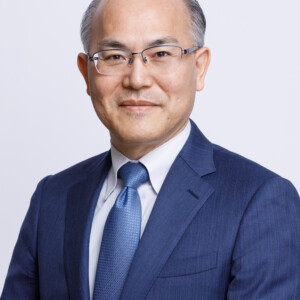
CEO of Noile-Immune Biotech Co., Ltd.
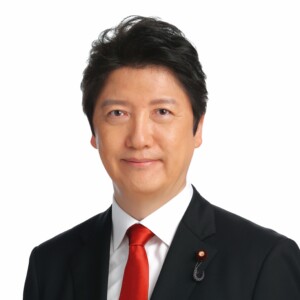
Yasushi Adachi, Member of the House of Councillors
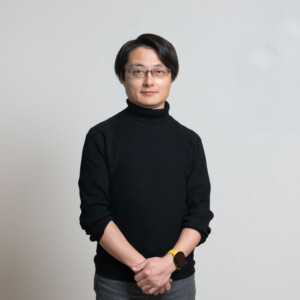
SB Intuitions Corporation President and CEO, Mr. Ijiri...

"Mitea ORGANIC" new product launch event

No comments yet.