

NVIDIA Japan Representative: Masataka Osaki
In a world connected by AI, let's leverage Japan's strengths to drive the future.
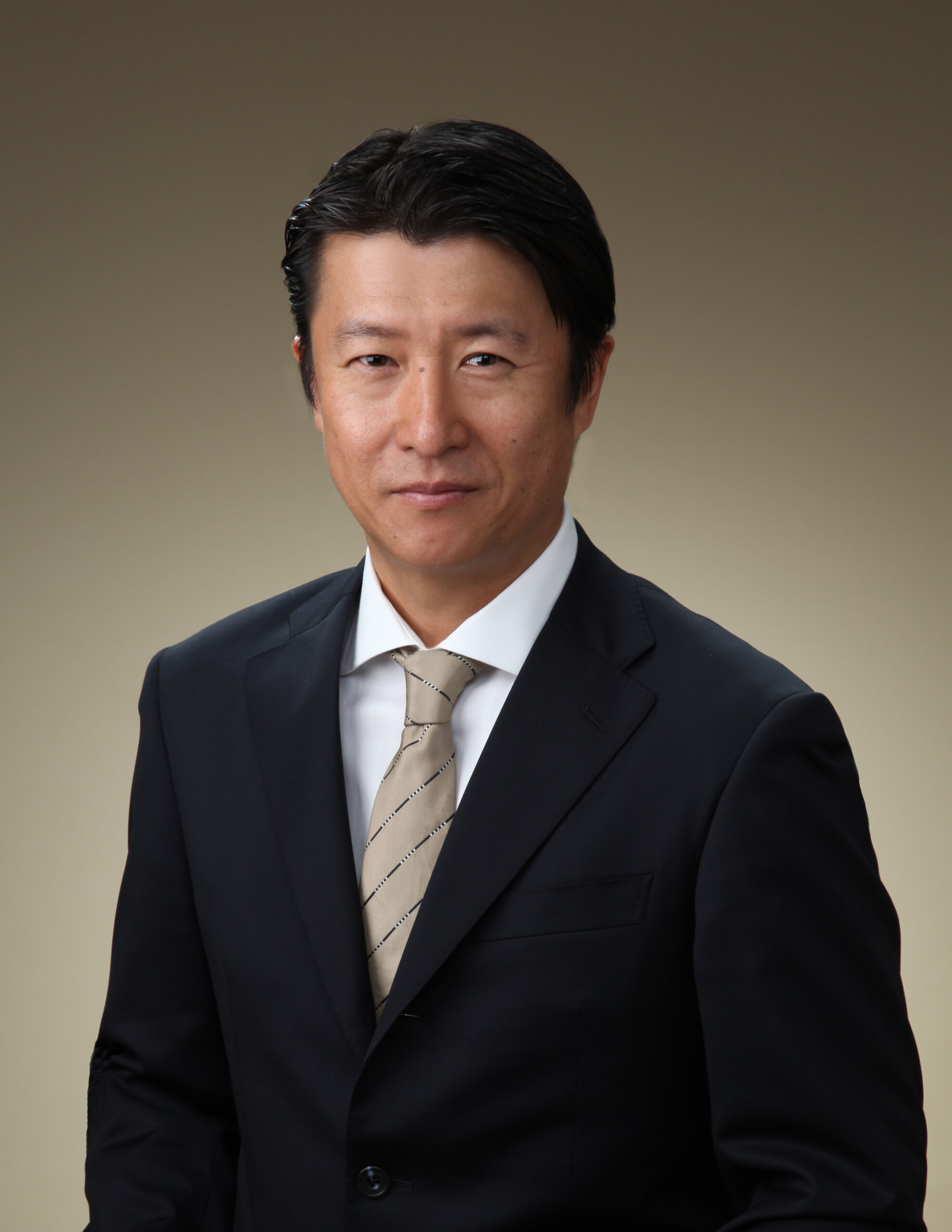
NVIDIA Japan Representative: Masataka Osaki
■ Profile
He joined Texas Instruments Japan in 1991. After gaining experience as an engineer and in sales in Osaka, he moved to the US headquarters. He was in charge of business development and worked on a wide range of products for over 20 years, while also holding various management positions. In 2014, he joined NVIDIA. He has been driving market and ecosystem expansion and has focused on popularizing AI computing in Japan. He holds a Master of Business Administration (MBA) degree from Tokyo Metropolitan University.
NVIDIA, a global leader in accelerated computing, has its Japan representative, Masataka Osaki, who says, "If everything is connected by AI, there is great potential for Japanese manufacturing and services." Reflecting on his diverse experiences as an engineer and in sales, he urged students who will live in the coming AI era to "be curious about many things and take on challenges they won't regret."
During my student days, I wasn't a particularly exemplary student like many of you. I didn't think much about work, and I didn't study that much either. All I did was work part-time and surf. It was the bubble economy era, and I enjoyed the atmosphere and the times.
I chose to major in nuclear engineering at Kinki University because I thought it was cutting-edge at the time. I believed that energy would become increasingly important in the future. However, I wasn't particularly passionate about it after entering university. The regret of "I should have studied more when I was a student" lingered even after I became a working adult. So, at the age of 40, I enrolled in graduate school at Tokyo Metropolitan University.
My first job was at the semiconductor manufacturer Texas Instruments. I was drawn to the party-like atmosphere typical of American companies and the friendly HR staff. After working there for 23 years, I joined NVIDIA in 2014. I was in my mid-40s and wondering if I should stay at the same company until I was 60 when I got an offer from NVIDIA. I spoke with CEO Jensen Huang, and I was greatly impressed by him. You only live once. I didn't want to regret it later, so I consulted with my family and decided to take the plunge.
■From semiconductors to "systems"
Originally, NVIDIA developed GPUs (Graphics Processing Units), semiconductors for graphics used in PC games and other applications. However, their superior computing power began to be utilized in the field of scientific and technical computing, and in 2008, NVIDIA's GPUs were adopted for the world's first supercomputer, "TSUBAME," at the Tokyo Institute of Technology. Shortly after I joined the company in 2014, the wave of AI arrived. NVIDIA's technologies, including GPUs, began to be used in various fields such as image recognition, autonomous driving, and medical imaging diagnosis. As a result, NVIDIA shifted its focus significantly towards AI, and its Japanese subsidiary expanded rapidly.
NVIDIA offers not only semiconductors like GPUs, but also complete systems that include software, servers, cooling systems, and storage. A key feature is the presence of experts deeply familiar with various industries, such as autonomous driving, drug discovery, medical imaging, and robotics. Instead of simply selling products, NVIDIA provides customers with the tools to build their own systems, fostering a long-standing ecosystem of developers.
In Japan, we collaborate with robotics companies such as FANUC, Yaskawa Electric, and Kawasaki Heavy Industries. We are particularly focusing on "physical AI." It's easiest to understand if you think of AI as the "brain" and robots as the "body." By having AI receive information from sensors, think, and move its body, robots can make autonomous decisions. Autonomous driving is one example of this.
■Those who don't confine themselves to their specialization but "enjoy" the world are the ones who thrive.
What I believe is crucial for talent to thrive in the age of AI is a keen awareness of technology. This means being sensitive to what industries and innovations are happening not only in Japan but also around the world. Furthermore, it's essential to have the flexibility to view the bigger picture rather than becoming fixated on a single specialty.
AI will connect previously separate worlds, such as games, cars, healthcare, universities, and startups. Those who find these changes "exciting" are the ones who will thrive. I believe that it is precisely because they find it enjoyable that they can become more sensitive to various things.
At NVIDIA, experts in various fields such as automotive, medical imaging, robotics, academia, and supercomputers work together. The Japanese subsidiary primarily hires experienced professionals, recruiting individuals who are well-versed in their respective industries or who have been deeply involved in technology, design, and development.
From now on, I want people to have expertise, but also look beyond their field of specialization. Because AI will offer a variety of options, the human ability to come up with ideas and decide what to combine and what to achieve in the end will be crucial.
■Connecting Japan's strengths with AI to create a new society
I don't think that NVIDIA works for America just because it's an American company. We work for the Japanese people, for Japanese industry, and for Japan. That's our role as representatives of Japan.
When it comes to AI, Japan lags behind the United States, China, Europe, and India. However, Japan has historically had strengths in hardware and services, and possesses a craftsmanship honed over a long period of time. By combining this with cutting-edge AI and software, Japan should be able to create AI that is uniquely Japanese in its safety and accuracy.
In fact, NVIDIA's history also has deep ties to Japan. Sega, a Japanese game manufacturer, was the first to adopt NVIDIA for PC games. Tokyo Institute of Technology has the "TSUBAME" supercomputer, and various Japanese industries have adopted the technology from an early stage. For this reason, NVIDIA considers Japan to be a distinct region.
■Message to university students
I hope you all take on challenges that you won't regret.
Once you enter the workforce, you'll face many small decisions, such as "Should I call this client today or not?" Each time, I've considered, "If I don't do this now, will I regret it later?"
There will be times when you worry and suffer. But if you overcome each challenge one by one, you will see a new view ahead. Cherish both the small and the big decisions you make, and keep moving forward one step at a time.
The world is about to change dramatically. AI will enable us to try things that were previously impossible. That's why I want you to have an adventurous spirit and a desire to try something new. I believe that each and every one of you has immense potential.
Student Newspaper Online, June 11, 2026 Interview with Kaito Sato, 3rd year student at Hosei University
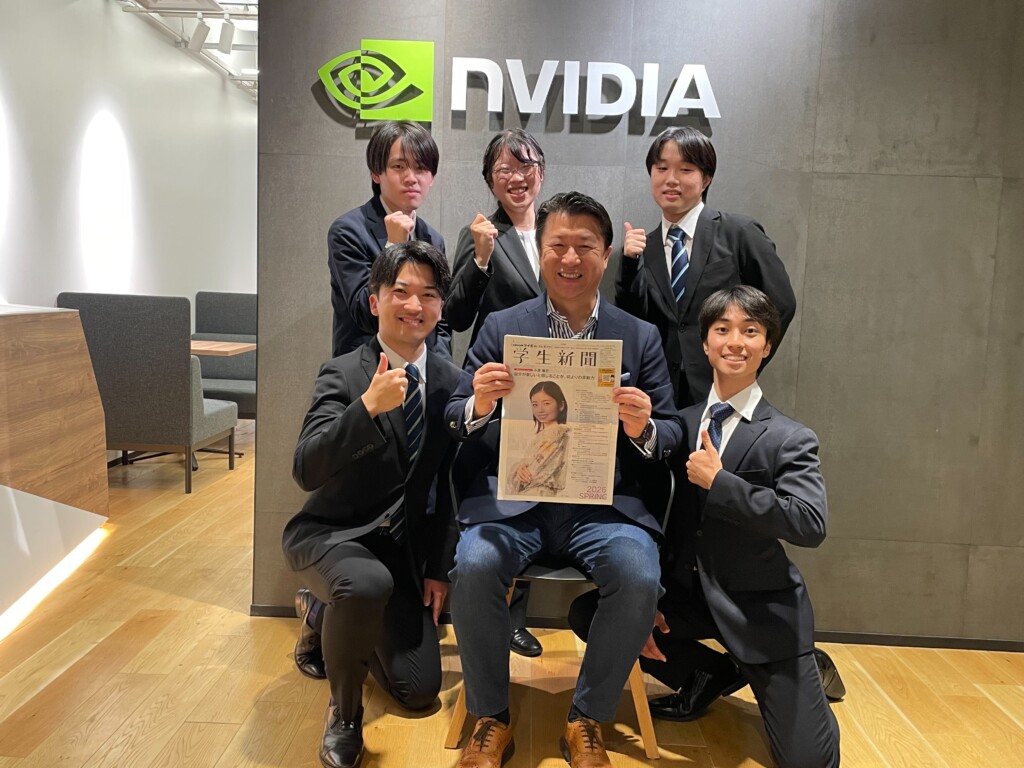
Kenhiko Yamada (1st year, Hosei University) / Chiharu Yamada (2nd year, Information Management Innovation Professional University) / Kaito Sato (3rd year, Hosei University) / Tatsushi Harada (2nd year, Nihon University) / Kyohei Nakazawa (3rd year, Waseda University)
List of related articles

Video creator ISSEI / CEO of GIVER Inc.

Nippun Co., Ltd. Marketing Headquarters Product Development Department ...

Tokyo Metropolitan Consumer Affairs Center: "STOP! Consumer Trauma Among Young People..."

Saitama Prefecture Governor Motohiro Ohno

Kabukiza Theater (Higashi Ginza, Tokyo) Theater Report: "Kotobuki Utsukushii"...

Yuta Hanada, Talent & Culture Department, Dome Corporation

AEON Co., Ltd. Executive Officer in charge of business promotion and branding...

No comments yet.